
INSECTS · CARPENTER ANTS

Carpenter ants in Quebec Identification, damage, and extermination

Carpenter ants don’t eat wood — they excavate it to build their colonies. Over a few seasons, an untreated infestation can compromise the framing, insulation, and structure of your property.

Pestora expert Speak to an expert (514) 546-2050
Pestora technician at work in Quebec
Pestora pest management specialist
Pestora team at work
Local & Fast

Three divisions to handle your infestation across Quebec

Identify the nearest Pestora division for a fast inspection of your carpenter ant infestation.

Coming soon

Pestora Gatineau / Outaouais

555, boulevard Saint-Joseph
Gatineau, QC J8Y 4A1
Number coming soon View division
Pestora expert

Not sure which division? — Call us at (514) 546-2050
Visual signs

How to identify a carpenter ant

Larger than common ants, more discreet than pavement ants. Here’s how to recognize carpenter ants and tell them apart from the other species found in Quebec.

Size

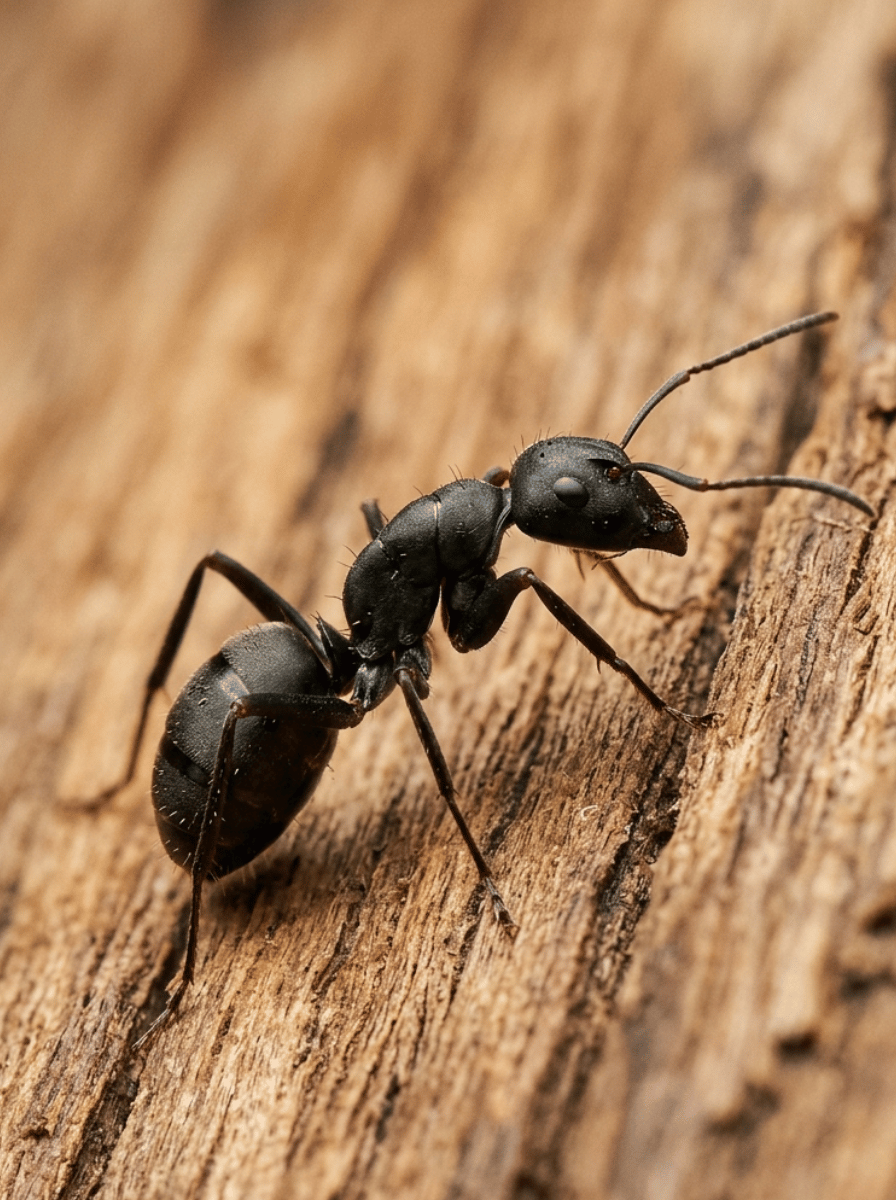
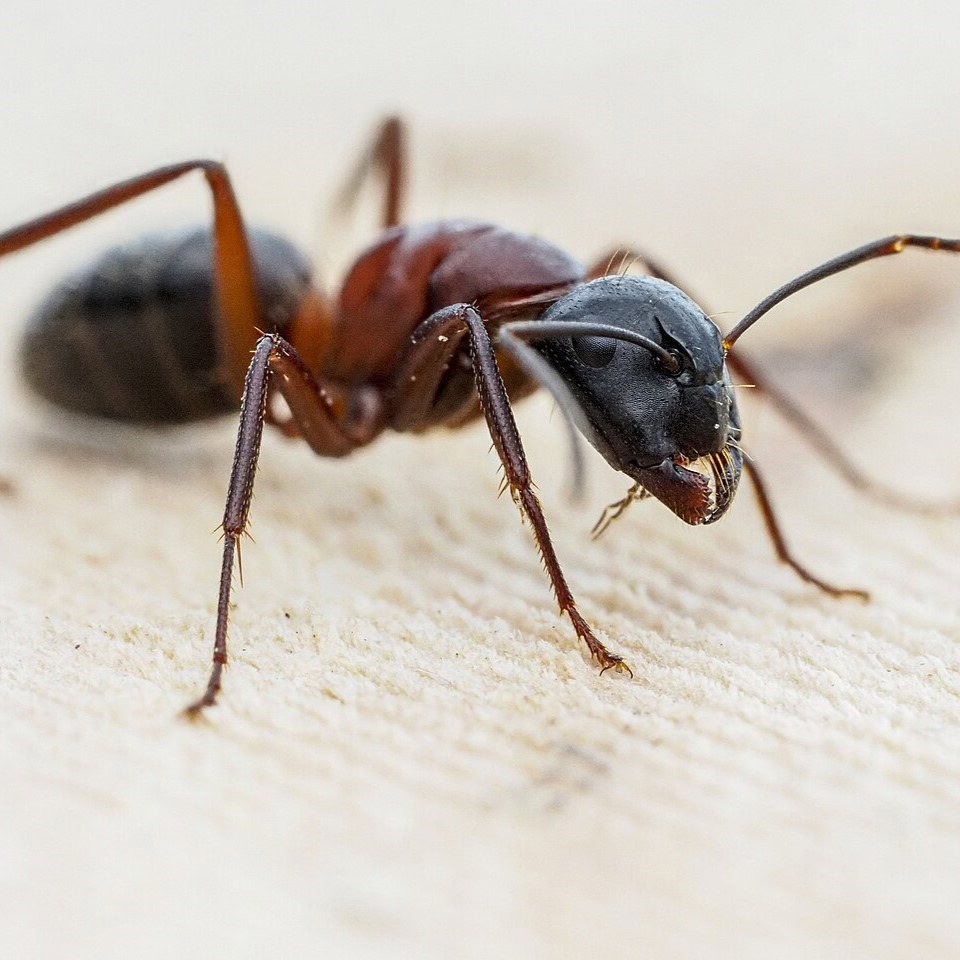
Between 6 and 13 millimetres, making them Quebec's largest ant species. Workers within the same colony can vary in size depending on their role.

Colour

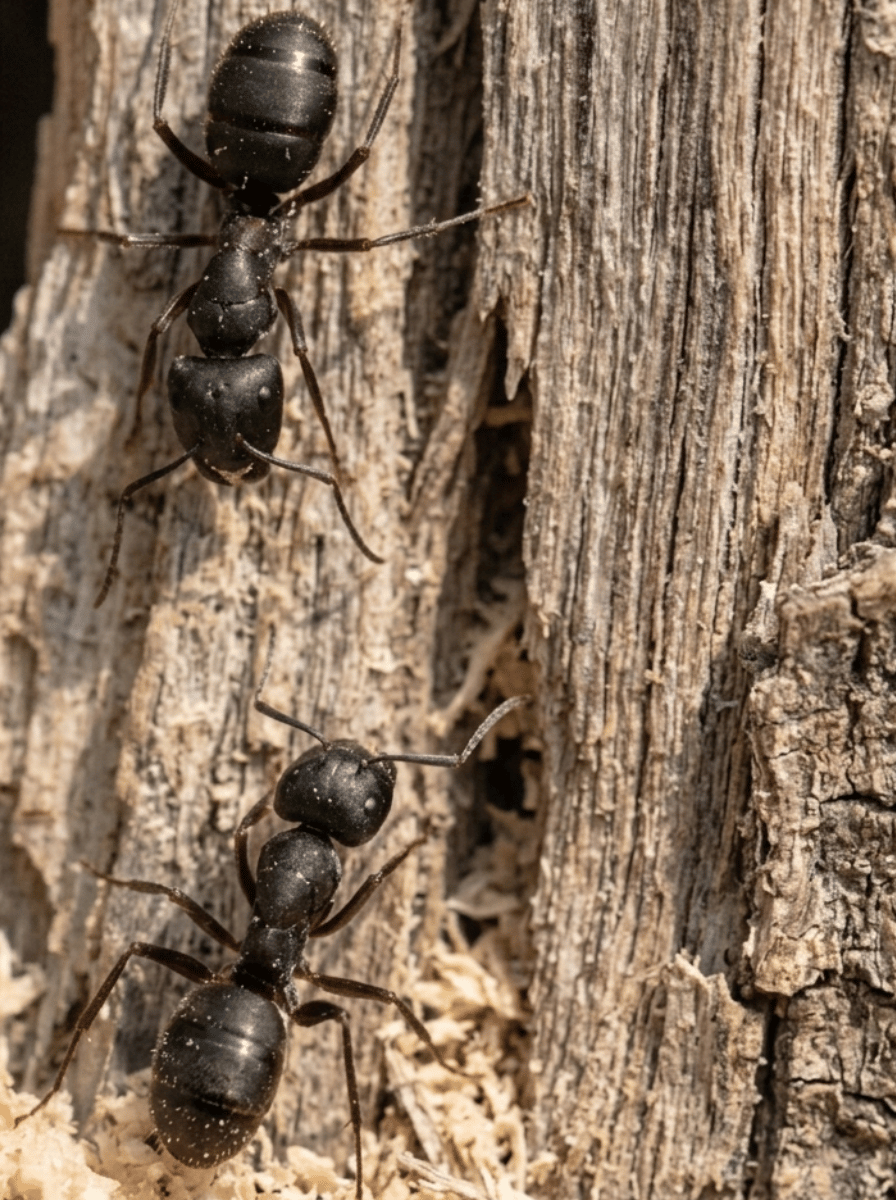
Mainly uniform black for Quebec's most common species, Camponotus pennsylvanicus. Some species show dark brown or reddish hints.

Physical appearance

Body segmented in three parts, narrow waist, elbowed antennae. The winged carpenter ants in spring have four unequal wings (front pair longer).

Behaviour

Mostly nocturnal activity, travelling in single files along walls or floors, peak presence from May to September. Active search for damp or decaying wood.

Signs to watch for

Signs of a carpenter ant infestation

Carpenter ants work silently and at night. By the time the infestation becomes visible, the colony can already number in the thousands. Here are the signs to watch for in your home.

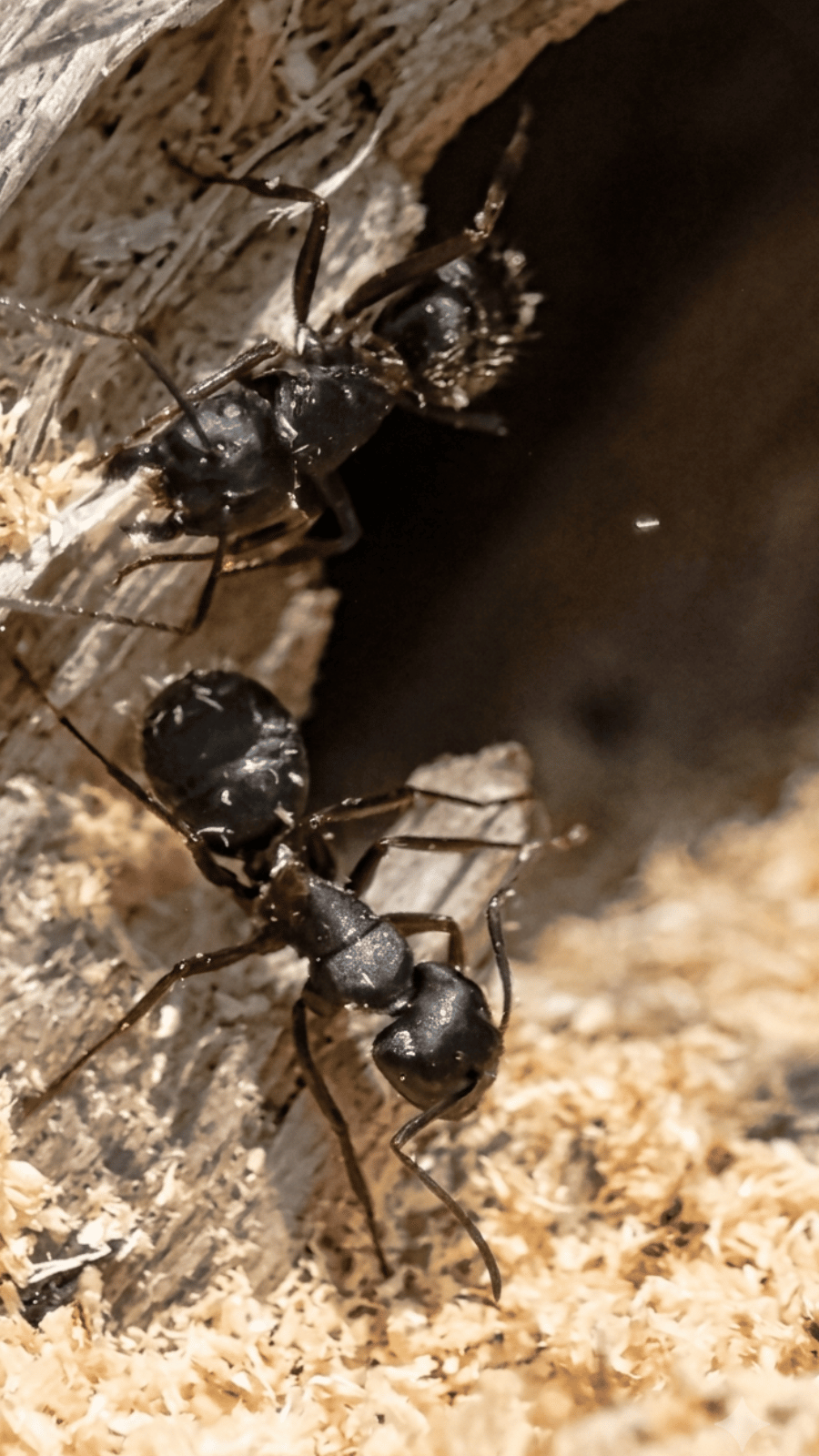
Small piles of fine sawdust, often mixed with insect remains, near baseboards, window frames, or beams. It’s the most reliable sign of active excavation.

Winged ants inside the home between April and June indicate a mature colony: these are the reproductives leaving to found new colonies.

A faint crackling sound at night inside walls, floors, or ceilings. It’s the worker ants excavating wood or moving through their galleries.

Large black ants in the kitchen, bathroom, basement, or around windows. Regular presence indicates a nest nearby.

Pestora team at work in Quebec discreet intervention
Where to look?

Where carpenter ants nest: main nest and satellite nests

Carpenter ants operate with a main nest (outdoors, containing the queen) and one or more satellite nests (inside structures). To eliminate the colony, you have to treat both.

Outdoor

Main nest

The parent colony, almost always outdoors.

  • Tree stump, logs on the ground, dead branch on a living tree.
  • Firewood stacked against the house or shed.
  • Fence, patio, deck, or wooden structure in contact with the ground.
  • Damp, partially decomposed wood: that's what they're looking for.
  • Contains the queen and most of the colony — this is the one to eliminate.
  • Often within 100 metres of the affected home.

Indoor

Satellite nests

The offshoots inside the home.

  • Joists, studs, or floors weakened by water infiltration.
  • Window frame, door threshold, skylight — anywhere water gets in.
  • Basement, crawl space, around plumbing lines.
  • Attic, behind a chimney, under a previously leaking roof.
  • Mainly contain workers and brood, but not the queen.
  • Connected to the main nest — treating just one satellite won't solve anything.
Peace of mind

The damage carpenter ants cause

Unlike termites, carpenter ants don’t eat the wood — they excavate it to build their galleries. Over a few seasons, an active colony can dig tunnels through framing, insulation, beams, and the bones of your home. The galleries are smooth, clean, and parallel to the wood grain, which distinguishes them from the irregular tunnels left by termites. Long-term, the property’s structural integrity can be compromised — especially in damp areas, where the ants work first. In Quebec, carpenter ants are responsible for more residential structural damage than all other insect species combined. The earlier the intervention, the less expensive the repairs.

Our action plan

The Pestora method for eliminating carpenter ants

Four structured steps to eliminate the entire colony — including the queen — and prevent any return. Surface treatment alone doesn’t work with carpenter ants.

Pestora expert Speak to an expert (514) 546-2050

01/ Inspection and nest locating

Locating of the outdoor main nest and indoor satellite nests. Inspection of damp areas, framing, water points, and the property's exterior perimeter. Successful elimination starts with precise locating.

02/ Targeted treatment of the queen

Application of Health Canada-approved baits and non-repellent insecticides. Worker ants carry the product back to the queen, who is the only real target of the treatment. Without the queen, the colony dies.

03/ Preventive exterior treatment

Perimeter application around the home, sealing of entry points, and treatment of outdoor sources (dead wood, stumps, branches in contact with the structure).

04/ Follow-up and verification

Follow-up inspection two to three weeks after the intervention to confirm colony elimination. Personalized preventive recommendations and a written warranty on the treatment.

Preventive measures

How to prevent a carpenter ant infestation

Carpenter ants settle where they find damp wood and easy access. Four preventive measures significantly reduce long-term infestation risk.

Repair leaks in the roof, gutters, and plumbing. Ventilate the basement and attic. Replace moisture-damaged wood before it becomes attractive to colonies.

Don’t store firewood against the foundation. Cut back tree branches that touch the roof or walls. Remove stumps and dead logs from the property.

Seal cracks in the foundation, around windows, and around door frames. Seal pipe and electrical wire penetrations entering the home.

Visual inspection of risk areas in spring and fall: basement, attic, exterior perimeter, underside of the deck. Early detection = less costly treatment.

Pestora team at work in Quebec Vigilance
Prevention

Other insects to watch for in Quebec

Carpenter ants are just one of the ant and insect species found in Quebec. Discover the other pests commonly treated by our exterminators.

FAQ

Frequently asked questions about carpenter ants

Do carpenter ants really eat wood?

No. Unlike termites, carpenter ants don’t feed on wood — they excavate it to build their galleries and nests. They feed on other insects, sap, ripe fruit, and sugary substances inside the home. This nuance matters: the damage is mechanical, not digestive, but the impact on the structure is still significant.

Several key differences: carpenter ants have a very narrow waist (termites have a thick one), elbowed antennae (termites have straight ones), and their reproductive wings are unequal in length (termites have equal wings). The galleries they dig are clean and smooth, while termite galleries contain mud and debris. In Quebec, termites are rare; carpenter ants are the most likely cause.

Activity starts as soon as temperatures stay above 10°C, usually mid-April in Quebec. Peak activity runs from May through September. The swarming of winged reproductives happens in spring, typically after a warm, humid spell. Visible activity inside the home in winter indicates an active satellite nest in the structure.

No. Spraying an off-the-shelf insecticide on visible ants only kills surface workers. The queen and most of the colony stay intact in the nest, and the ants keep multiplying. Worse, some repellent insecticides trigger colony budding: the queen responds by creating new satellite nests to spread the risk.

With a professional approach targeting the queen, complete elimination typically takes 2 to 6 weeks. Baits and non-repellent insecticides are carried by worker ants back to the nest, where they reach the queen. A follow-up inspection confirms elimination. Our written warranty covers any return during the contract period.

Yes, particularly if untreated. A visible infestation during a pre-purchase inspection can lower the property’s value or sink the sale. Buyers and their inspectors are alert to signs of carpenter ants in Quebec, given the scale of the problem. A treatment and warranty certificate from a certified exterminator reassures buyers.

Several alternative approaches exist: physical exclusion via sealing, eliminating moisture sources, removing decaying wood sources, mechanical traps, and boric acid bait formulations. Depending on colony size, these methods can be enough on their own or combined with a targeted intervention. Our exterminators apply integrated pest management (IPM) principles to minimize pesticide use.

Rates vary based on property size, number of nests identified, accessibility of treated areas, and infestation severity. A typical residential intervention for a moderate infestation falls within an accessible range, and our quotes are always free with a fixed price before any commitment. The cost of professional treatment is significantly lower than the cost of structural repairs from an untreated infestation.

Act now

Signs of carpenter ants in your home ?

Rigorous inspection, targeted elimination of the queen, and a written warranty. Free, no-obligation quote.