
 ChatGPT
 Perplexity
 Claude
Spotting a skunk in your yard, catching that foul smell near the shed, or finding freshly dug holes in the lawn: these are situations thousands of Quebec homeowners run into every year.
Knowing how to get rid of a skunk then becomes a priority, both to protect your peace of mind and your pets.
The good news: the problem can absolutely be solved, as long as you use the right methods and follow Quebec regulations. This guide explains why skunks settle on your property, how to recognize them, how to drive them away and, when the situation calls for it, how to call in a wildlife control specialist to get rid of skunks for good.
Why does a skunk settle on your property?
A skunk never picks a spot at random. Like most pests, it’s after three things: food, water, and shelter. If your property offers these easily, it will move in without hesitation. The striped skunk, the only species found in Quebec, is a nocturnal omnivore that adapts just as well to the countryside as to urban neighbourhoods. Understanding what attracts it is the first step to getting rid of it and, above all, keeping it from coming back.
What attracts skunks: food and waste
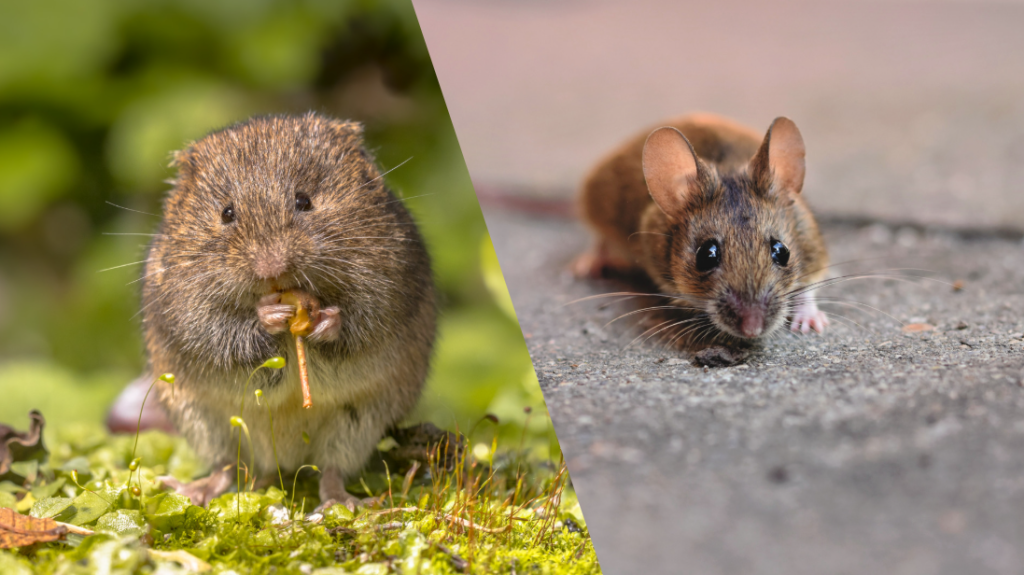
Food is by far the biggest magnet. A skunk digs up lawns and gardens hunting for white grubs, larvae, and insects, especially in spring and fall when the soil is moist. It won’t pass up easy sources either: poorly sealed garbage, compost piles, table scraps, and pet food left outdoors. Bird feeders draw seeds, but also rodents like mice and voles, which are themselves on the skunk’s menu.
To make your property less appealing, a few simple habits go a long way:
- Store garbage in a shed or garage and use airtight containers.
- Harvest fruit and vegetables from your garden promptly.
- Never leave pet bowls outside overnight.
- Clean under bird feeders and keep seeds off the ground.
These measures apply to several pests: they also help keep mice and voles out of the home, which are drawn to the same food sources.
Water and shelter: under the shed, porch, or deck
A poor climber but an excellent digger, the skunk builds its den at ground level, in a dark, quiet spot. The spaces under a shed, porch, deck, outbuilding, or crawl space are its favourite refuges. It often reuses a burrow abandoned by a groundhog or another mammal rather than digging its own. A nearby water source, such as a pool, pond, or watering can, makes the spot even more attractive. It’s usually under these structures that a skunk settles to give birth in spring, which makes the job considerably harder once the kits have arrived.
A skunk settled under a building should never be forced out: a foul spray in an enclosed space can make the area unlivable for days.
How to recognize a skunk’s presence
Because skunks are nocturnal, you’ll often notice the signs before you ever cross paths with the animal. The most obvious clue is the smell: a skunk that feels threatened can spray its musk several metres, and that foul odour lingers in the air, on clothing, or in a pet’s coat. Other signs are unmistakable:
- small, freshly dug cone-shaped holes in the lawn;
- droppings containing insect remains;
- patches of lawn lifted or churned up;
- scratching sounds under a structure at dusk.
If you notice several of these clues, a skunk has likely taken up residence. The sooner you act, the easier it is to get rid of it before it breeds.
How to drive a skunk away: repellents and deterrents
Before considering trapping, you can try to drive skunks off by making your property inhospitable. These methods give the best results when no female has given birth yet. Here are the most common approaches to send this pest packing.
Natural skunk repellents
Several natural repellents can discourage a skunk from venturing onto your property:
- coyote urine, from its natural predator, sold at pet stores and spread around the den;
- human hair, scattered near entry points, whose scent bothers the animal;
- mothballs, made with naphthalene, to handle carefully given their toxicity.
Keep in mind that these products repel the skunk without fixing the root of the problem. They work alongside removing food sources, not as a replacement for it.
Devices that scare a skunk off
Beyond smells, some devices rely on the element of surprise. Ultrasonic repellents emit a sound that’s unpleasant to the animal, but avoid them if you have pets, who are also sensitive to those frequencies. A motion-sensor light disrupts the skunk, which prefers darkness, while an automatic sprinkler douses it the moment it approaches. Combined, these tools improve your odds of scaring a skunk off, without guaranteeing a permanent departure.
Remove the attractants and block access
The most effective deterrent is removing what keeps the skunk around: food, water, and shelter. Once you’re certain no animal is underneath, you can block access beneath the shed, porch, or deck with wire mesh buried about thirty centimetres deep. This exclusion technique stops the skunk (and other pests) from digging under the structure again. For properties that get visited regularly, an integrated pest management (IPM) program combines inspection, monitoring, and exclusion to keep the area protected. The same principles help prevent rodent infestations, which are often drawn by the same resources.
Scare a skunk off for good
Our certified technicians inspect your property, remove attractants, and block access to prevent any return.
Trapping: the only lasting solution (and what the law says)
Once a skunk has already established its den or is breeding, repellents quickly reach their limits. Trapping then becomes the only way to get rid of it for good. It involves setting a baited cage trap near the entry and exit routes, then releasing the animal far from homes. It’s a trickier operation than it looks, and Quebec law regulates it strictly.
The skunk, a protected species in Quebec
Contrary to popular belief, you can’t kill a skunk any way you please. In Quebec, trapping and relocating the striped skunk are regulated by the provincial wildlife authority, the Ministère de l’Environnement, de la Lutte contre les changements climatiques, de la Faune et des Parcs (MELCCFP). Killing the animal or moving it without following these rules can expose you to penalties. A cruelty-free capture, followed by release into a suitable habitat, remains the responsible and compliant approach. It’s also worth noting that a skunk can carry rabies: avoid all direct contact, both for your sake and your pets’.
Why entrust trapping to a certified exterminator
Handling a cage, baiting it properly, and releasing a skunk without getting sprayed takes experience and the right equipment, like opaque traps that keep the animal from lifting its tail. An exterminator has the knowledge, permits, and gear needed to step in safely. Calling a professional also ensures the skunk is relocated correctly and that entry points are sealed to prevent another visit.
A skunk exterminator across Quebec
From Montréal to the Laurentians and on to Gatineau, a Pestora team responds quickly, safely, and in unmarked vehicles.
Frequently asked questions about skunks
How do you get rid of skunk smell?
Skunk smell is best neutralized with a mix of hydrogen peroxide, baking soda, and dish soap rather than tomato juice, whose effectiveness is overrated. For a pet that’s been sprayed, wash it promptly with this mixture, avoiding the eyes, then rinse thoroughly. On clothing, a machine wash with regular detergent is usually enough. If the foul odour soaks into the house, air it out and clean the affected surfaces without delay.
Is a skunk dangerous to my pets?
Yes, mainly in two ways. First, a skunk that feels threatened can spray your dog or cat with a musk that’s hard to remove. Second, it can transmit rabies through a bite or contact, which is why it’s important to keep your pets at a distance and their vaccinations up to date. When in doubt, see a veterinarian.
How long does it take to trap a skunk?
It depends on the situation: you should often plan on three to five days per skunk, the time it takes for the animal to get used to the cage trap and enter it. When a female has given birth, the job takes longer, because the kits have to be caught too. An experienced skunk exterminator adjusts the bait and the placement of the traps to speed up the process.
How do you keep a skunk from coming back?
Prevention comes down to three habits: removing food, blocking access under structures with buried wire mesh, and keeping the yard clear. These same steps also limit the presence of other pests. Periodic follow-up ensures the access points stay sealed season after season.
Get rid of a skunk without delay
Get a free, fixed-price quote before the work begins and a written guarantee on every capture.