
Rat Exterminator in Quebec Inspection, Treatment and Written Guarantee
Pestora is a rat exterminator working across Quebec, and we are often on site in under 24 hours. We locate the colony, treat it with tamper-resistant bait stations and snap traps, then seal the entry points: without that last step, a fresh colony simply replaces the one we just cleared. Free quote at a fixed price and a written guarantee, both before any work begins.


A rat exterminator near you, everywhere in Quebec
Six divisions couvrent la province et interviennent souvent dans les 24 Six divisions cover the province and often respond within 24 hours. Reach the team closest to you: heures. Joignez l’équipe la plus proche :
Pestora Grand Montréal
300-204, rue du Saint-SacrementMontréal, QC H2Y 1W8 (514) 546-2050 Voir la division
Pestora West Island
3551, boulevard Saint-CharlesKirkland, QC H9H 3C4 (514) 546-2050 Voir la division
Pestora Lanaudière
2800, boulevard des EntreprisesTerrebonne, QC J6X 4S8 (514) 546-2050 Voir la division
Pestora Laurentides / Rive-Nord
2175, boulevard de la TraverséeSaint-Jérôme, QC J7Y 0T2 (450) 516-8858 Voir la division
Pestora Gatineau / Outaouais
555, boulevard Saint-JosephGatineau, QC J8Y 4A1 (819) 991-4447 Voir la division
Pestora Trois-Rivières / Mauricie
1285, rue Notre-Dame Centre, bureau 1Trois-Rivières, QC G9A 0A0 (819) 991-4447 Voir la division

Not sure which division? — Call us at (514) 546-2050
How to identify a rat
Mistaking a rat for a large mouse leads straight to the wrong treatment: the traps, the baits and the entry points are not the same. Here is how to tell which rodent you are dealing with.
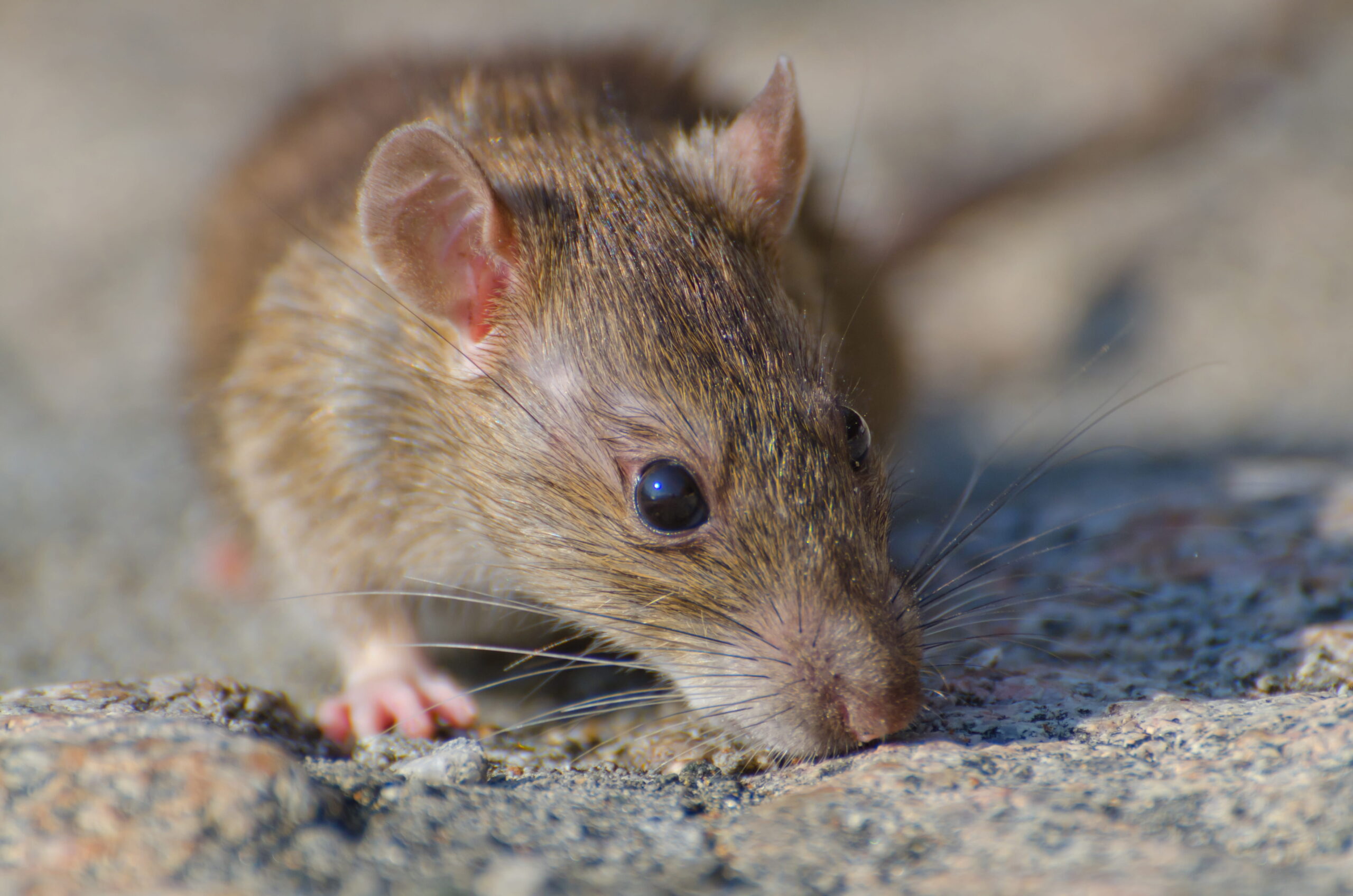
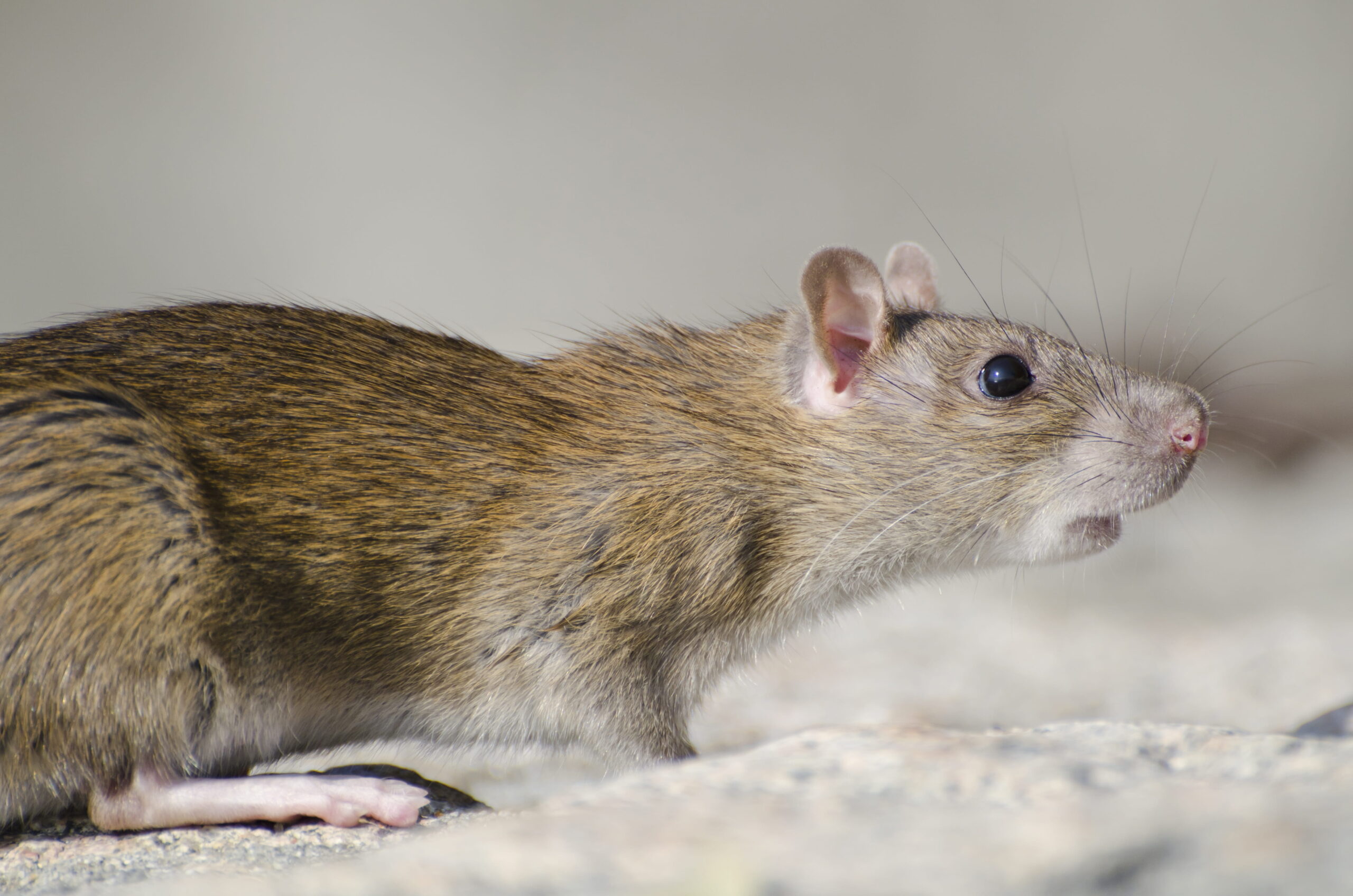
The Norway rat (Rattus norvegicus)
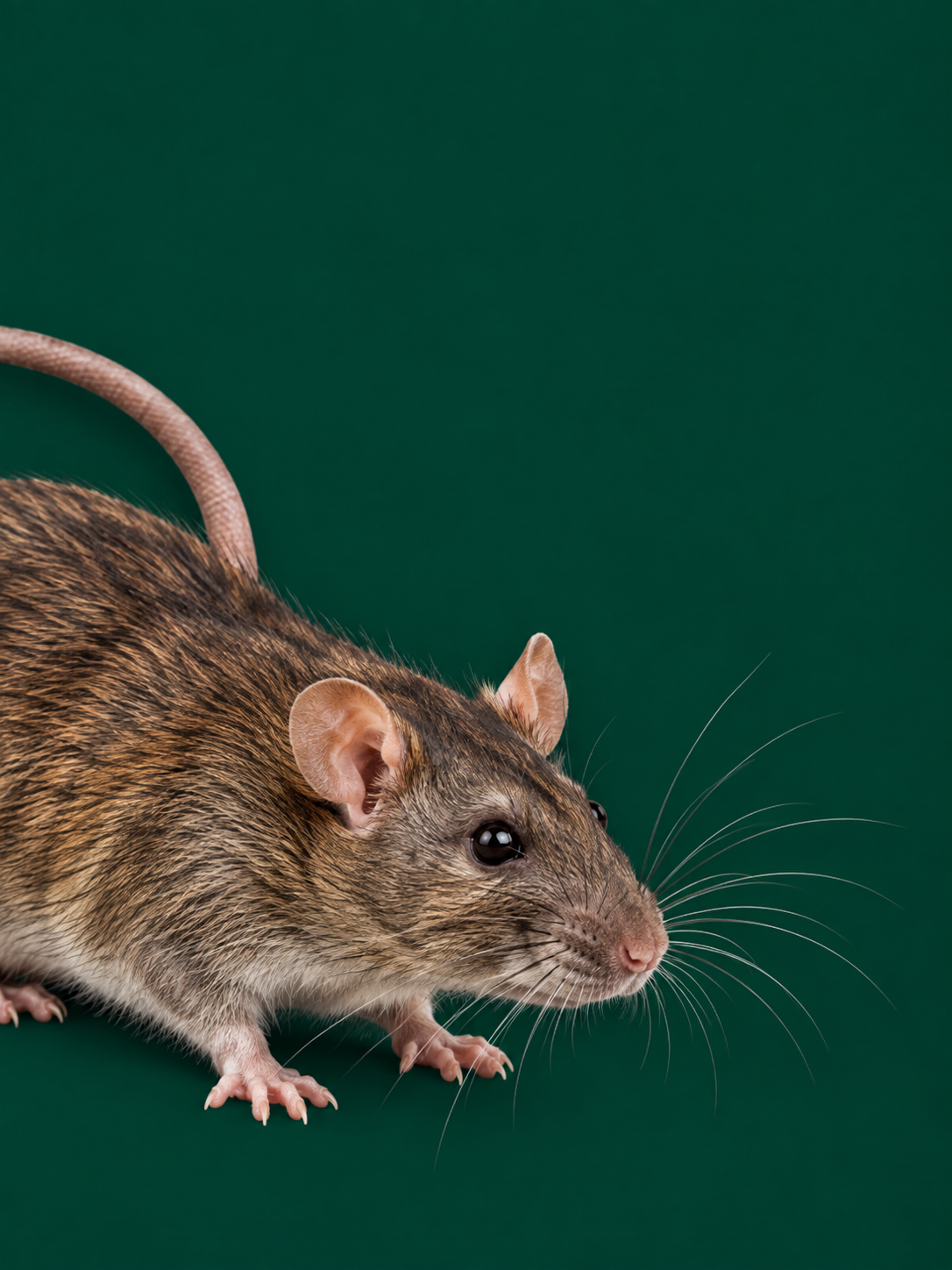
This is the rat you meet in Quebec, also called the brown rat or the sewer rat. A stocky body of 20 to 25 cm, a thick tail shorter than the body, a blunt muzzle and small ears, and a weight of 200 to 500 g. It burrows, it swims, and it lives at ground level, in sewers and in basements.
The black rat (Rattus rattus)
Smaller and leaner, with a tail longer than the body, large ears and a pointed muzzle. It is rare in Quebec, where the climate does not suit it, but it climbs far better than the Norway rat: it stays up high, in roof spaces and in the attic.
Rat or mouse: the difference at a glance
An adult house mouse measures 7 to 10 cm and weighs 15 to 25 g, compared with 200 to 500 g for a rat. A rat leaves droppings of 15 to 20 mm with rounded ends; a mouse leaves small grains of 3 to 6 mm. A rat needs an opening of about 2 cm to get in, while a mouse slips through 6 mm.
Its behaviour
Rats come out at night and stay wary of any new object for several days, which is why so many traps set by occupants stay empty. Intelligent, with a sharp sense of smell, a rat follows the same routes along the walls and rarely crosses open ground.
Why a rat infestation gets worse so fast
A female rat reaches sexual maturity at around three months, has a gestation period of about 22 days and produces five to seven litters a year, each with six to twelve young. One litter tolerated in the spring becomes a settled colony by the fall, with several nests on the property. That is why getting rid of rats without delay always costs less than waiting.
Think you have rats? Get an inspection.
A certified rodent technician inspects, treats the colony and hands you a written guarantee before the work starts.
The signs of a rat infestation
Rats rarely show themselves, and one seen in broad daylight means the colony is large and food is running short. Here are the signs of a rat infestation to catch before it gets to that point.
Large droppings
Black, glossy droppings of 15 to 20 mm with rounded ends, near food sources, along the walls or in the pantry. Their size alone separates a rat infestation from a mouse problem.
Grease marks and runways
Dark, oily smears along baseboards, pipes and beams, left by the fur of a rodent that takes the same route every night. On a dusty floor you also see the footprints and the drag mark of the tail.
Night noises and gnawed materials
Scratching and heavy movement inside the walls, in the attic or in the crawl space, mostly after dark. Rats gnaw wood, insulation, cables and electrical wiring, and leave chewed material with tooth marks wider than a mouse’s.
Raided supplies and contaminated food
Cereal bags punctured, boxes gnawed open and food soiled in the pantry. A rat contaminates far more food than it eats.
 we intervene discreetly

How rats get into a building
This is the question that settles the case: as long as the way in stays open, a new colony replaces the last one. The Norway rat swims and burrows, which opens routes a mouse never takes.
Access points
-
The sewer system and the plumbing
This is the most underestimated way in. A rat travels up a cracked pipe, a broken sewer connection or a floor drain with no backflow valve, and ends up inside without ever going through a door. Roadwork and excavation regularly push colonies toward neighbouring buildings.
-
Openings at ground level
Open garage doors, foundation cracks, warped thresholds, unscreened vents, poorly sealed pipe penetrations. An opening of about 2 cm is enough, and the rodent widens a smaller hole by gnawing through wood, plastic or insulation.
-
Burrows against the foundation
Holes 5 to 10 cm across dug against the foundation, under a shed, a deck or a concrete slab, with fresh soil at the entrance. The Norway rat nests outdoors and comes inside to feed, which a mouse does far less.
-
Where it settles once inside
- The basement and the crawl space, around floor drains and plumbing entries.
- Walls, dropped ceilings and service chases, which work as corridors.
- Waste rooms, commercial kitchens and any pantry it can reach.
A rat can transmit leptospirosis and salmonellosis, through contact with urine or droppings, through a bite, or through contaminated food. Its fur soils any surface or supplies it runs across on the way.
The structural risk is just as serious. Gnawing away at electrical wiring, a rodent can cause a short circuit and a fire, and its burrows end up undermining the ground under a slab. For a restaurant or a food processing plant, a rat infestation puts food safety and compliance on the line. We work in residential, commercial and industrial pest control.
The Pestora method, step by step
Quatre étapes structurées pour éliminer la colonie active et empêcher tout retour. Le piégeage isolé ne suffit pas : sans exclusion physique des points d’entrée, une nouvelle population s’installe en quelques semaines.
01/ Inspection
We locate the droppings, the grease marks, the runways, the burrows and the entry points, inside the building and around it. This is the step that tells us whether we are dealing with a single animal or an established colony.
02/ Identification
We confirm the species, Norway rat or black rat, and rule out an infestation of house mice or voles. The treatment plan, the choice of bait and the size of trap all follow from that.
03/ Treatment
Our specialist combines the three levers above and doses them according to the building, the presence of children or pets, and the constraints of the site. We prefer to treat within an integrated pest management approach rather than in a single pass.
04/ Follow-up
We return for follow-up visits until activity stops, then we close the entry points. The written guarantee is handed to you before the work begins, with free return visits if the rats come back.
How a rat colony is actually eliminated
There is no miracle product, but there are three levers that work together. Used on its own, none of them settles an established infestation. Combined, they break it and keep it from coming back.
Treatment methods
-
Tamper-resistant bait stations
The backbone of professional rat control: locked, anchored boxes set on active runways and along the foundation, holding a rodenticide registered by Health Canada. The lock keeps them out of reach of children, pets and non-target wildlife. They double as monitoring points, since bait consumption tells us when the activity stops.
-
Snap traps
Rat-sized snap traps, set inside closed boxes along the walls. We favour them wherever poison has no place, in commercial kitchens and in food processing, and whenever a poisoned rodent must not be left to die inside a wall cavity. They also confirm the result on the spot: a sprung trap is proof, not a guess.
-
Exclusion and sealing
This is the part that makes the result last, and the part almost nobody does alone. Steel wool and mortar, metal mesh, thresholds refitted flush, sealed pipe penetrations: everything wider than 2 cm gets closed with materials a rat cannot chew. Skip this step and the treatment merely clears the way for the next colony.
-
Why hardware store products fail
Handling rats yourself almost always disappoints, and for specific reasons:
- Rat neophobia. A rat avoids anything new for several days, so a trap set out carelessly sits empty while the colony keeps feeding somewhere else.
- Poor placement. A trap set in the middle of a room does nothing: rats hug the walls and never cut across open ground.
- The dead rodent in a wall. Poison bait left unmonitored sends the animal off to die inside a cavity, with a stubborn smell and carrion insects on top of it.
- Nonstop breeding. Taking out three or four animals while a female produces a litter of 6 to 12 does not change the curve, and nothing has been sealed.
How to prevent a rat infestation
After a rat extermination, a well-sealed building remains the best protection you have. Here is what we recommend.
Seal the openings
Close cracks and gaps wider than 2 cm with steel wool and mortar, or with metal mesh.
Protect the drains
Screen stormwater outlets and vents, and have any cracked sewer line checked.
Cut off the food
Garbage bins and waste containers properly closed, a sealed composter, no bag left outside the night before collection.
Clear the perimeter
Move woodpiles away from the foundation and keep a clear strip along the building.
Inspect in the fall
This is the season when rodents look for warmth. Our integrated pest management program sets out the checks to run.
 Vigilance
Other rodents to watch for in Quebec
Rats are only one of the species our technicians handle. House mice are smaller, quieter and treated differently: see mouse extermination and, if you can hear something moving inside a wall, the guides on our blog. Voles are easily mistaken for the house mouse, a comparison we cover in our article on voles versus mice. For the group as a whole, see every rodent we treat.
Rats
Norway rat, black rat, and roof rat. Larger and more aggressive than mice, they call for a dedicated treatment protocol and sturdier sealing.
Rat controlVoles and field mice
Small rodents of fields and underbrush. Increased presence in fall when they seek winter shelter. Damage to gardens, outdoor electrical conduits, and foundations.
Vole controlView all rodents
Mice, rats, voles, muskrats, and more. The full range of nuisance rodents treated by Pestora across Quebec, with methods adapted to each species.
View all rodentsFrequently asked questions about rats
Does one rat mean there are others?
Almost always. The Norway rat lives in a group with a strict social hierarchy, and an animal spotted indoors is travelling between a nest and a food source. Seeing one in broad daylight usually points to a colony that is already large.
What is the difference between a rat and a mouse?
Size, above all: 200 to 500 g for a rat, 15 to 25 g for a mouse. A rat’s droppings measure 15 to 20 mm compared with 3 to 6 mm, and it needs an opening of about 2 cm to get in. The traps and the baits used against mice will not get rid of rats.
Can a rat really come up through the toilet?
It is rare, but possible: the Norway rat swims well and can travel up a damaged sewer connection. The common scenario remains the cracked pipe, the floor drain with no backflow valve or the breached foundation. A rat exterminator checks those entry points during the inspection.
Do rats carry diseases?
They can transmit leptospirosis and salmonellosis, through contact with urine or droppings, through a bite, or through contaminated food. Wear gloves to clean up droppings, wash your hands afterward, and see a doctor after any bite.
Are your treatments safe for children and pets?
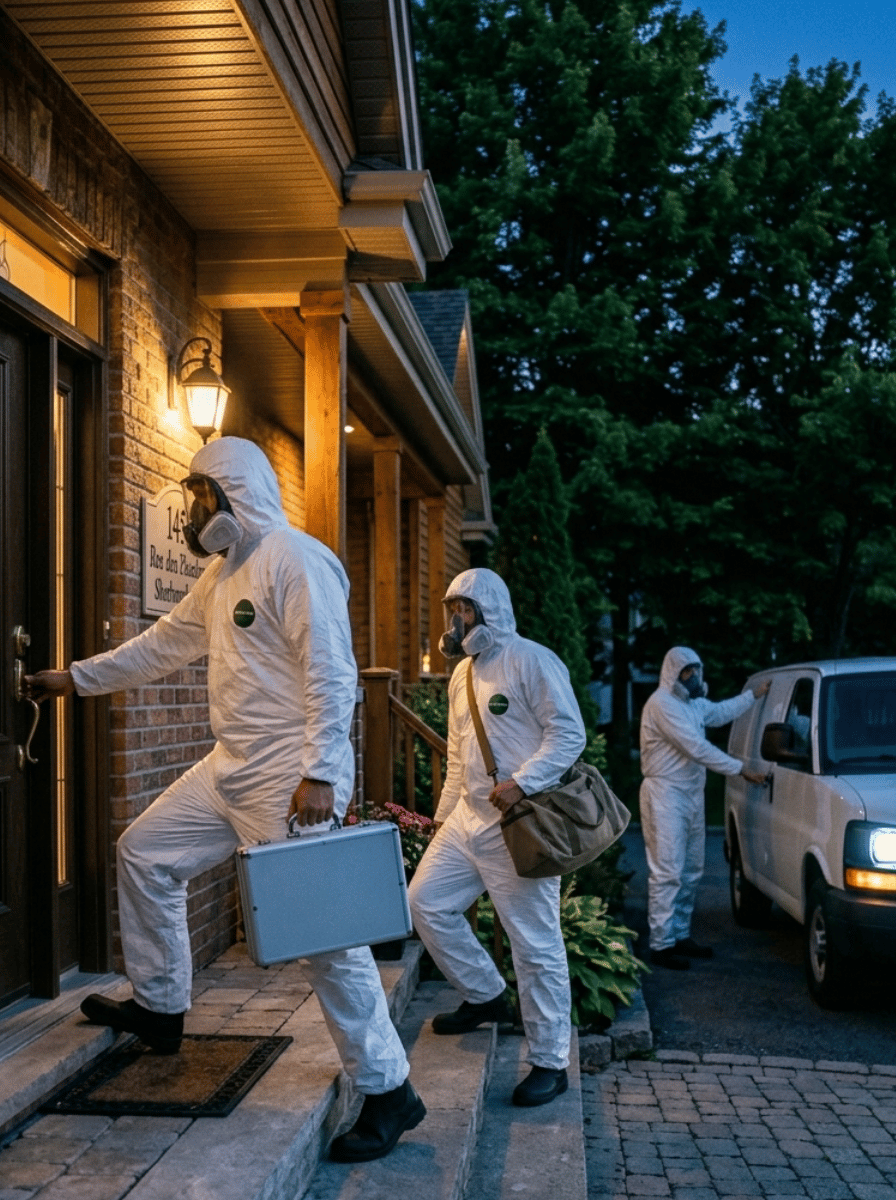
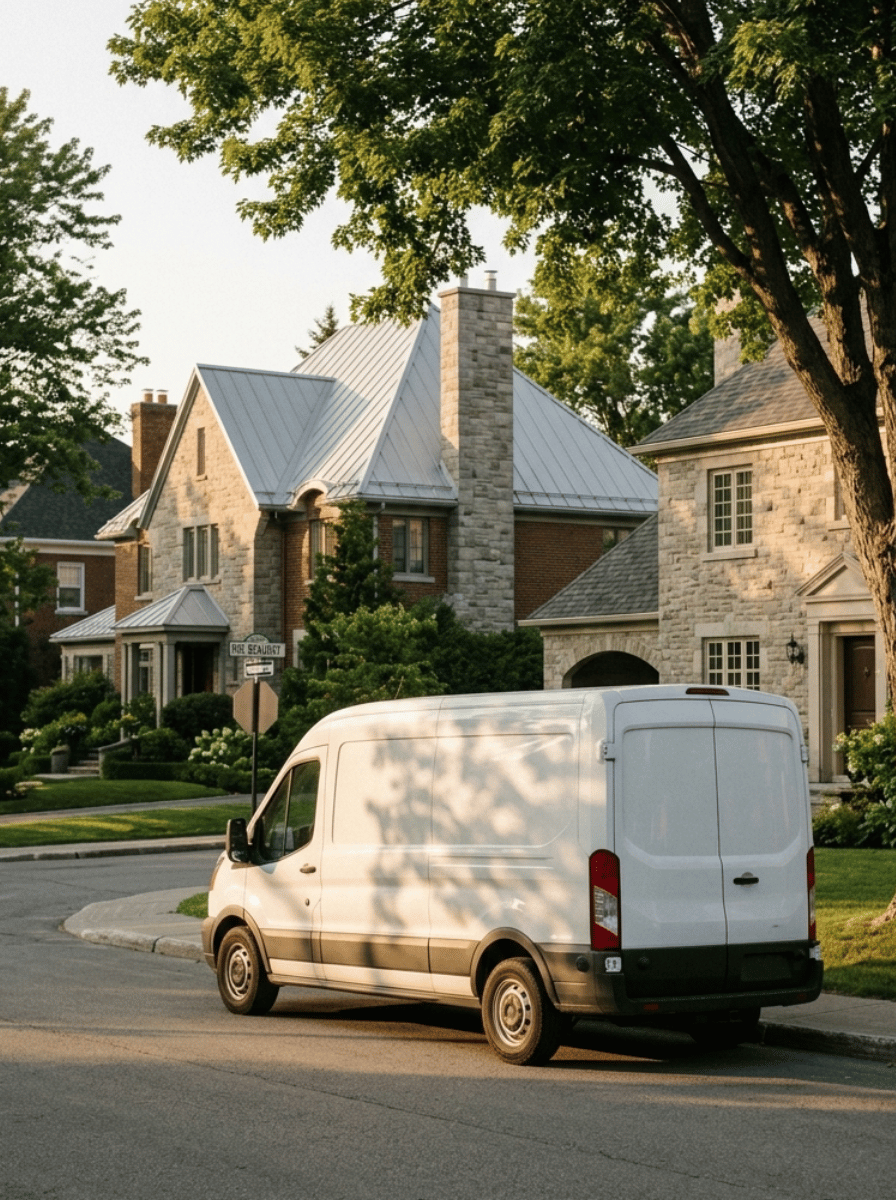
Yes. We use locked, anchored bait stations that children and pets cannot reach, and products registered by Health Canada applied by a certified technician. Pestora is a member of the AQGP and our vehicles are unmarked, for the sake of discretion.
How long does a rat extermination take?
It depends on the size of the colony and on access to the nesting areas. A simple case is settled in a few visits one to two weeks apart, while an established colony with outdoor burrows takes longer. You get the schedule at the inspection.
How much does a rat extermination cost?
The price depends on the scale of the infestation, the type of building, access to the affected areas and how much sealing work is needed. Our quotes are free and the fixed price is given to you before you commit to anything.
Rats in your home or your business ?
A professional rat exterminator inspects, treats the colony, seals the entry points and hands you a written guarantee. Free quote, no obligation, everywhere in Quebec. See how we work or read about our integrated pest management program.