
NUISANCE WILDLIFE · SKUNK

Skunk Removal in Quebec: Identification, Exclusion and Prevention

A skunk smell drifting from under the deck at dusk, fresh digging holes in the lawn at sunrise: the first signs of a skunk on your property are rarely discreet. This nuisance wildlife species is looking for a quiet shelter under a deck, a shed or a porch, and once the burrow is dug, it comes back night after night.

Left alone, the situation exposes your family and your pets to a foul spray, to bites and to a rabies risk. At the first signs, a skunk exterminator works through inspection, exclusion of every access point and prevention, so the problem is settled at the source.

Pestora expert Speak to an expert (514) 546-2050
Mouffette au Québec
Intervention Pestora en gestion parasitaire
Mouffette
Close by, and quick about it

Divisions serving you across Quebec

Find your Pestora division and reach the team closest to you for fast skunk control anywhere in Quebec, from Greater Montreal through to the Outaouais.

Pestora expert

Not sure which division? — Call us at (514) 546-2050

Signs of a skunk

Recognizing the striped skunk and the signs it leaves

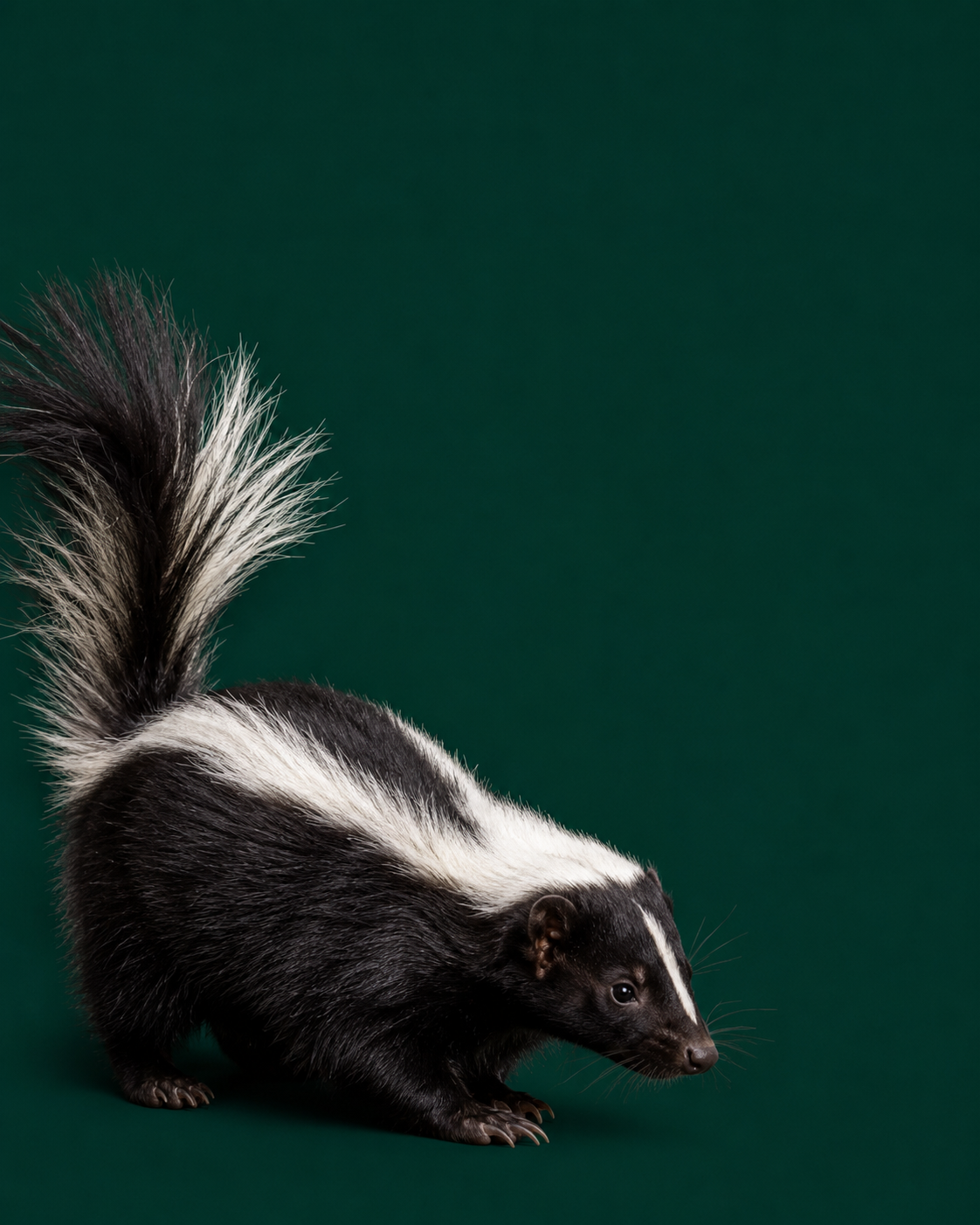
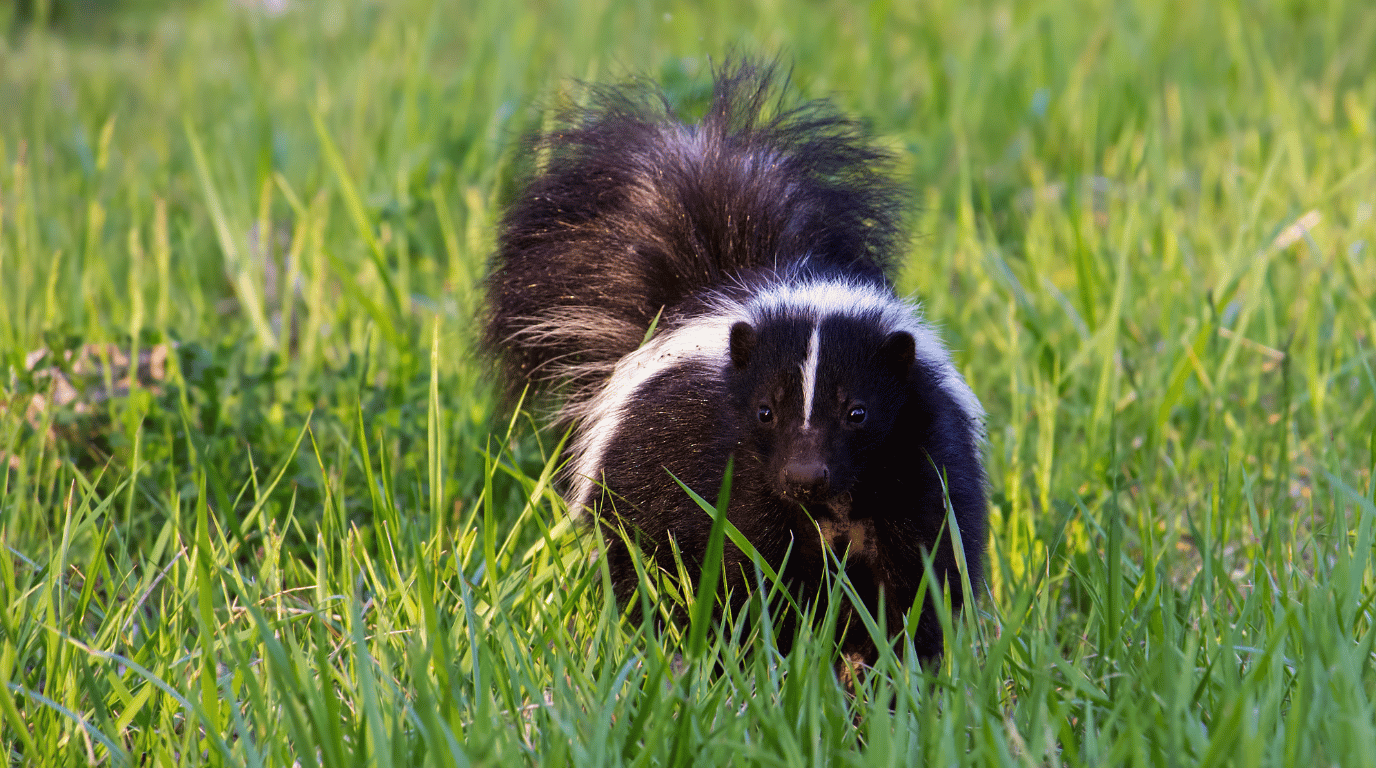
The striped skunk (Mephitis mephitis) is the only skunk species found in Quebec. Nocturnal and discreet, it gives itself away mainly through odour and through the traces it leaves around your property. Here is how to recognize a skunk and spot the signs that one has moved in.

The skunk smell

A persistent musky odour near the deck or the shed, especially at dusk, is often the first clue. That skunk smell sharpens noticeably when the animal feels threatened and sprays.

Digging holes in the lawn

Small cone-shaped holes, 5 to 10 cm across, dug into the lawn overnight, point to a skunk hunting for grubs and insects. Those digging holes multiply fast and wreck the grass.

A burrow under a structure

A burrow opening 15 to 20 cm wide at the base of a deck, a porch, a shed or a foundation means the shelter is active. Black and white hairs, droppings and footprints usually give the burrow entrance away.

A shelter under your structures

Why a skunk settles on your property

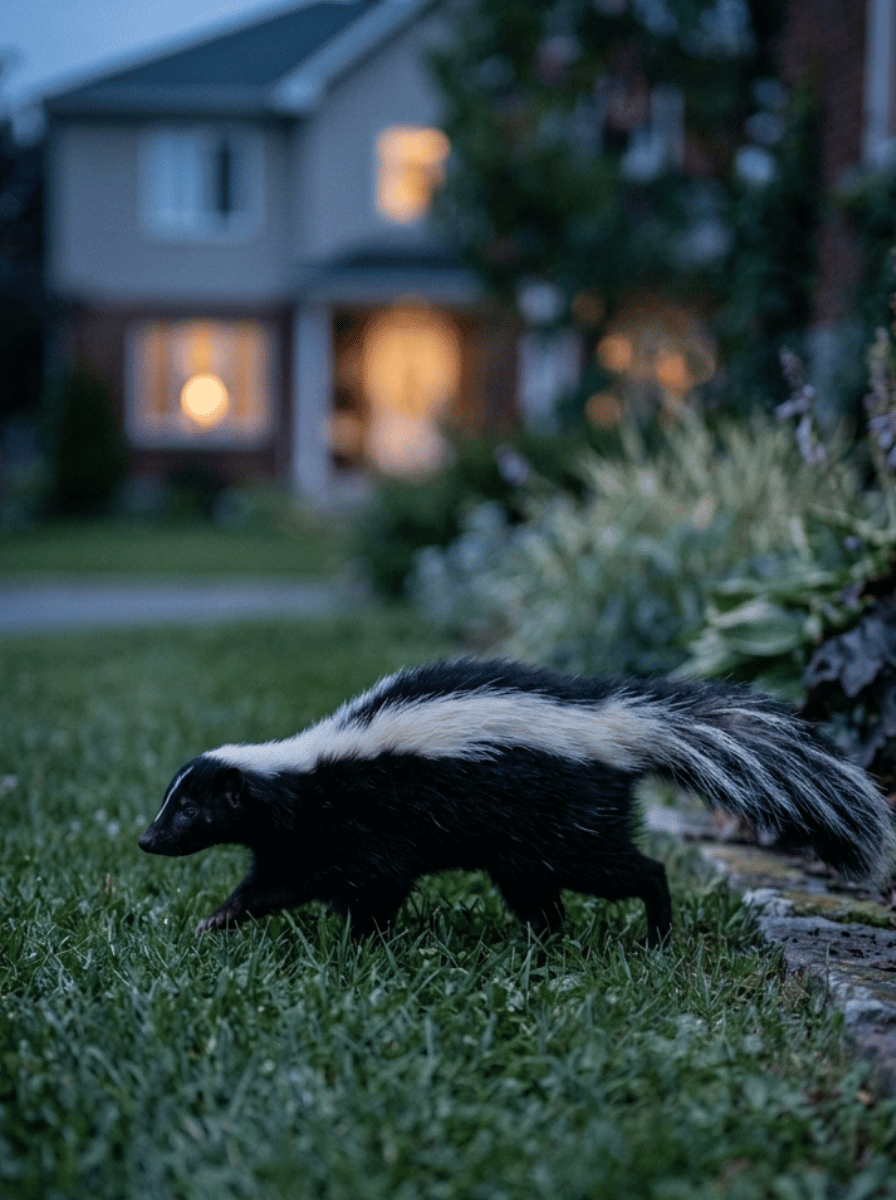
The striped skunk wants three things: a quiet shelter, easy food and peace. Your outdoor structures offer exactly that setting.

As long as the access under your deck stays open, a skunk that moves out is quickly replaced by another.

Équipe Pestora en intervention au Québec intervention discrète

Health and safety

The risks of a skunk near the house

A skunk living under a deck is more than an odour problem: it creates real risks for your family, your pets and your property.

  • Spray and odour: a fluid loaded with sulphur thiols, produced by the anal glands and projected several metres, which causes nausea and eye irritation and soaks into everything in its path.
  • Bites, scratches and rabies: the skunk is one of the main rabies vectors in Quebec; a bite or a scratch calls for medical or veterinary attention.
  • Damage to the lawn and the foundations: digging holes, turned-up turf and a burrow dug at the base of foundations and decks.
  • Danger to pets: a dog or a cat that approaches the burrow risks being sprayed, bitten and exposed to rabies.
Our plan of action

The Pestora method for humane skunk removal

Four structured steps to remove the skunk humanely, seal off its access points and prevent any return. Whether the skunk has settled under the deck of a home or along the edge of a business, the approach is the same. For sites that need continuous monitoring, an integrated pest management (IPM) program includes nuisance wildlife follow-up.

Pestora expert Speak to an expert (514) 546-2050

01/ Inspection

A full inspection of your property and your structures, to confirm that a striped skunk is present, gauge the scale of the situation and map the active runways, from the deck to the shed.

02/ Identifying access points and burrows

Precise location of every burrow and every access point under decks, porches, sheds and foundations. In spring we also check for young before any intervention, as responsible wildlife management requires.

03/ Exclusion and removal

Humane removal of the skunk, then exclusion: a buried metal mesh barrier and sealed access points that close off the space under your structures for good. Any trapping and moving is carried out in line with Quebec wildlife regulations.

04/ Prevention and follow-up

Preventive recommendations, a follow-up visit if needed and a written guarantee handed to you before the work starts. Our MELCCFP-certified technicians make sure no skunk moves back in.

Preventive measures

How to keep a skunk from coming back

A skunk settles where it finds shelter and food. A few exclusion and deterrence measures sharply reduce the odds of a new burrow.

Install a solid metal mesh, buried about 30 cm deep, and seal every small opening around the deck, the porch and the shed. Physical exclusion remains the most effective protection against nuisance wildlife.

Bring pet food in at night, lock your garbage bins, pick up fallen fruit and treat the lawn grubs that draw skunks in.

Motion-sensor outdoor lighting, woodpiles and debris cleared away, dense vegetation trimmed back along the foundations.

A proper exclusion protects your property from skunks, and from raccoons and groundhogs at the same time.

Moufette au Québec Vigilance
Also worth watching

Other pests to watch for in Quebec

The skunk is only one of the species our exterminators track. A single inspection often turns up other pests around the house.

FAQ

Frequently asked questions about skunks

How do I get rid of a skunk under the deck?

The lasting method combines three moves: identify every access point and every burrow, remove the skunk humanely, then install a buried exclusion barrier. Plugging a hole without checking whether the animal (or its young) is inside only makes the problem worse. An on-site assessment determines the right sequence.

In Quebec, trapping and moving a wild animal such as a skunk are governed by wildlife regulations, administered by the ministry responsible (MELCCFP). Our technicians work professionally, humanely and in line with those regulations; the exact approach is decided during the on-site assessment. We always favour lasting exclusion, which settles the cause instead of moving the problem somewhere else.

The odour comes from the spray, a fluid rich in sulphur thiols that the skunk releases to defend itself. Tomato juice is a myth: on surfaces and on pets, a mix of hydrogen peroxide, baking soda and dish soap gives far better results for odour removal. As long as the skunk stays under the deck, the smell keeps coming back; exclusion is the real fix.

Yes. A dog or a cat that approaches the burrow risks a spray in the face, a bite or a scratch, and exposure to rabies. Keep your animals away from the suspect deck or shed, and have the situation assessed quickly.

The striped skunk is one of the main rabies vectors in Quebec. Any bite or scratch, to a person or to an animal, has to be taken seriously and assessed by a health professional or a veterinarian. That is one of the reasons to act early rather than live alongside a skunk.

Females give birth in the spring, and dependent young can be in the burrow from May to July. Sealing the access points at that moment risks walling in the young, which is both cruel and a source of fresh odours. Our technicians always check for young before exclusion.

Prevention rests on exclusion and on removing the attractants: a buried barrier under your structures, locked garbage bins, pet food brought in at night and motion-sensor lighting. Those measures discourage raccoons and groundhogs too. A proper exclusion beats a new intervention every summer.

The price depends on the scale of the situation, the number of burrows, how accessible the space under your structures is and how much exclusion work is needed. We never set a price blind: our quotes are free, with a fixed price given before you commit to anything.

Act now

A skunk under your deck ?

Thorough inspection, access points and burrows identified, lasting exclusion and a written guarantee. Free quote, no obligation, anywhere in Quebec, from Greater Montreal to the Laurentians and Gatineau.